
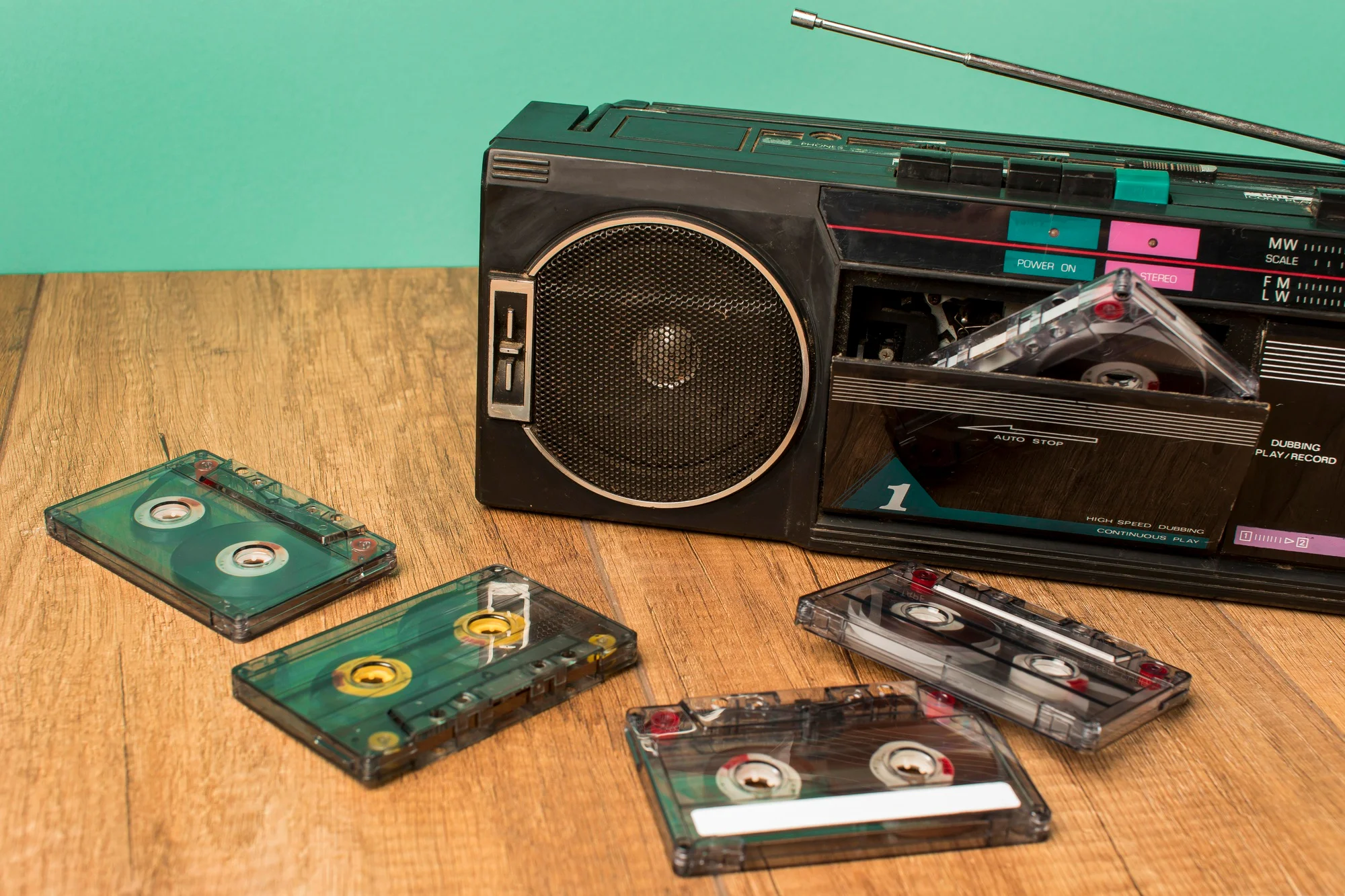
Audio Cassette to Digital Service for Family Voices
A familiar voice on a cassette can stop a family in its tracks: a grandparent telling a story, a child’s first piano recital, a wedding toast, a church sermon, or a message recorded years ago for someone who is no longer here. An audio cassette to digital service gives those recordings a future before the tape, the cassette shell, or the last working player lets you down.
Many people put off transferring cassettes because the tapes appear fine in a drawer. Unfortunately, cassette tapes can deteriorate quietly. The magnetic coating can weaken, tape can stretch or break, and old players can chew or damage a recording that may be impossible to replace. Digital preservation is not only about convenience. It is a careful way to safeguard voices, music, and moments that belong to your family history.
Why cassette recordings need attention now
Compact cassettes were made for everyday listening, not for decades of storage. Even tapes kept indoors can be affected by heat, humidity, dust, and the normal aging of their materials. A tape may still play, but it can develop hiss, uneven speed, muffled sound, dropouts, or moments where the audio fades in and out.
The cassette deck matters just as much as the tape. Belts harden, motors drift, pinch rollers wear down, and playback heads become dirty or misaligned. A low-quality player can make a good tape sound poor. Worse, a malfunctioning machine can snag the tape and create a repair problem where there was none before.
There is also the access problem. A cassette that survives physically is still difficult to enjoy if no one in the family owns a reliable cassette player. A digital file can be played on a computer, phone, tablet, television, or shared with relatives who live across the country. The original remains part of the archive, while the recording becomes useful again.
What an audio cassette to digital service should do
A professional audio cassette to digital service begins with careful handling, not a one-size-fits-all process. Each tape should be inspected before transfer, especially when it is old, visibly damaged, tightly wound, or has been stored in a garage, attic, or humid space.
The goal is to capture the best available playback from the original recording. That means using properly maintained equipment, monitoring the audio as it is transferred, and watching for issues such as distorted sound, unstable speed, or tape damage. Some recordings need basic cleanup after capture, while others should remain largely untouched so the character of the original is preserved.
Cleaning up sound involves judgment. Reducing distracting hiss or hum can make voices easier to understand, but excessive processing may make speech sound unnatural or remove details from music. For a family interview, clarity may be the priority. For a cassette made by a local band, a recital, or a treasured radio recording, preserving the original tone may matter more. The right approach depends on the tape and why it matters to you.
A dependable service should also explain what you will receive. Most families benefit from standard digital audio files that are easy to play and share. If you are building a long-term archive, ask whether a higher-quality preservation file can also be provided. Having both can be practical: one file for everyday listening and one master file for safekeeping.
The recordings families are most grateful to save
Cassette collections are often more meaningful than they look. They may be labeled only with a first name, a month, or a handwritten note that has faded over time. Once transferred, those little mysteries can become some of the most valuable recordings in the home.
Common cassette projects include recorded letters from deployed service members, oral-history interviews, memorial recordings, family gatherings, children singing or telling stories, language lessons, sermons, dictated memoirs, and old answering-machine messages. Musicians may also have rehearsal tapes, original songwriting demos, or recordings of performances that were never copied anywhere else.
Do not assume a blank-looking tape has no value. Families often reused cassettes, recorded over only part of a side, or saved a tape with no label at all. It is worth checking carefully before discarding anything. An experienced transfer specialist can help identify what is playable and flag tapes that need special attention.
Preparing your cassette collection for transfer
You do not need to clean or repair tapes yourself before bringing them in. In fact, trying to force open a stuck cassette or reattach broken tape without the right tools can cause more damage. Keep each cassette in its case if you have it, and place loose tapes in a clean, dry box for transport.
If you know the contents, write down what is on each tape. A simple note such as “Mom’s interview, 1994,” “Dad’s band,” or “Christmas messages” can make the finished digital collection much easier to organize. Include dates, names, and side A or side B information when possible. These details may seem small now, but they become invaluable when family members revisit the recordings years from now.
Avoid storing cassettes in a hot car, near speakers, or beside strong magnets. Keep them away from moisture and direct sunlight. If a tape has mold, smells musty, is visibly wrinkled, or has snapped tape hanging from the shell, separate it from the rest of the collection and let a professional examine it.
Repair and difficult tapes: when expertise matters
Some cassette problems are repairable. A broken leader, cracked shell, jammed reel, or damaged pressure pad may be addressed so the recording can be played safely. However, repair is not a promise that every second of audio will sound perfect. If the magnetic layer has deteriorated or a section was damaged long ago, there may be permanent loss.
That is why a careful transfer is worth more than simply connecting an old cassette deck to a computer. The work involves evaluating the tape, choosing suitable playback equipment, making adjustments when needed, and knowing when not to push a fragile cassette further. For irreplaceable recordings, the priority should be preserving as much as possible without creating additional damage.
Hernandez Video brings more than 35 years of hands-on audiovisual experience to legacy media, including recordings that need patient handling rather than a quick, automated transfer. Families deserve clear communication about what can be saved, what may need repair, and what the finished files will be like.
Choosing the right digital delivery format
The best delivery choice depends on how you plan to use the recordings. If your main goal is listening and sharing, common digital audio files are simple to play on most devices. If several relatives want copies, separate files labeled by tape and side can prevent confusion.
For long-term preservation, keep more than one copy. Save the files on your computer, an external drive, and a reputable cloud storage account if you use one. Digital files are easier to duplicate than cassettes, but they still need to be organized and backed up. Name files clearly with the person, event, and approximate date rather than relying on labels like “Tape 1” or “Side B.”
You may also want a disc copy for a family member who prefers a physical format. There is no single best option for everyone. The important thing is choosing a format your household will actually use and keeping a protected copy for the future.
Give the voices a place in family life
Once your recordings are digital, do not let them disappear into an unnamed folder. Play a grandparent’s story during a family gathering. Pair an old cassette interview with scanned photographs. Share a meaningful clip with siblings or cousins. A voice can carry personality, humor, accent, and emotion in a way that a written memory cannot.
Set aside the tapes that matter most and have them checked before another year passes. The cassette in the back of the closet may hold a voice your family will be grateful to hear again.